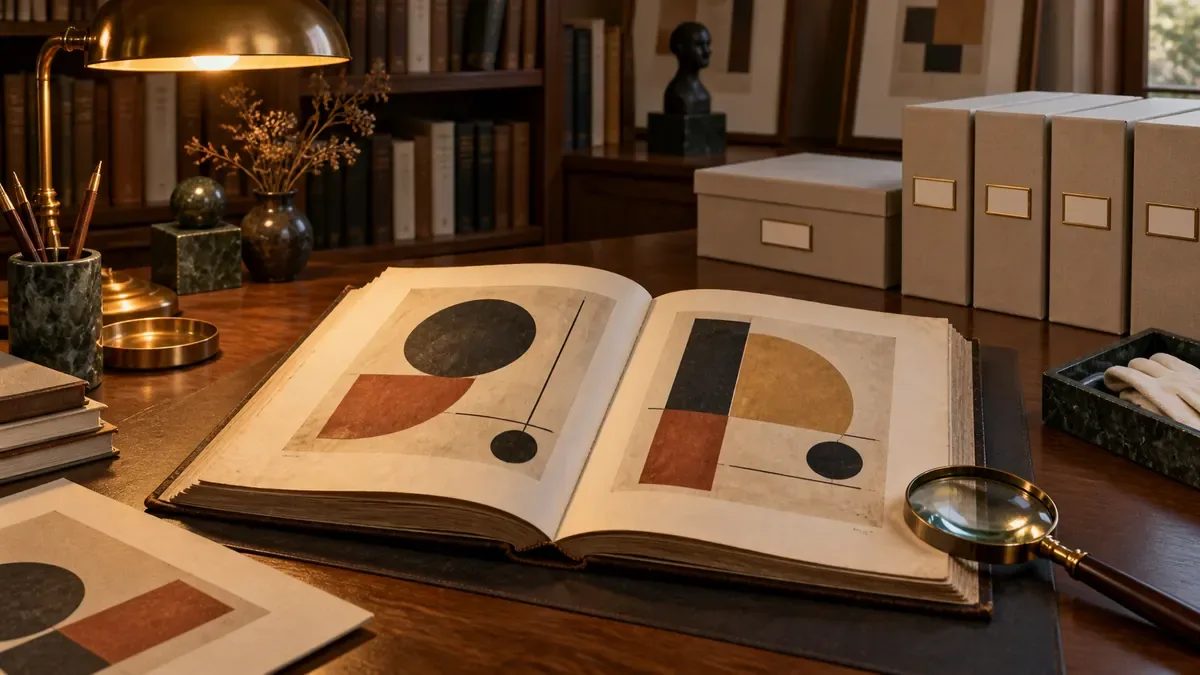
Design history and poster archives should be examined to understand decisions, not to take ready-made forms. Reading the context of the work makes it easier to develop original ideas.
Read the image along with the conditions in which it is produced
Investigate what audience, where, and what production opportunities a poster has reached. A choice that seems plain today may be associated with the print constraint of that era. Do not rely on information in a social media sharing without verifying the history of the work, its designer, and its resource institution. Separate the archive record from the comments that were added later.
Extract principle instead of form
You can study a strong cross-location, the relationship of writing with photography, or the use of limited color. Moving the same letter format, icon, and composition of the reference together takes you away from the original solution. Try the principle you are studying with your own text and with a different visual material. Return to a more basic level of decision if the result looks similar.
Connect the art review to the design question
The aspect or layered narrative in a picture can help to think about the reading flow of an up-to-date campaign. This does not require major generalizations about the artist. Explain which detail contributes to what design decision. Do not present your own interpretation as a historical fact; keep the assessment separate with the proven knowledge.
Check the right of visual use also
The presence of a work on the Internet does not mean that it can be freely used in a commercial project. The rights conditions of the work and the photo used may be separate. Read the descriptions on the relevant registration page of the museum or archive. Store the source link on the reference board; complete the rights control for the images to be published before the project is delivered.